
Ovarian Rejuvenation &
PRP Therapy for Low Ovarian Reserve
Ovarian rejuvenation is a day procedure in which platelet rich plasma, prepared from a sample of your own blood, is injected directly into your ovaries under ultrasound guidance with the aim of supporting ovarian function. At Demeter Fertility it is delivered as a structured clinical program, not a one off injection, and it may be considered by women with low AMH, diminished ovarian reserve, premature ovarian insufficiency or age related fertility decline.
Dr. Knight performed the first intraovarian PRP procedure in Australia in 2017 and our specialists have since completed hundreds of them, refining the protocol as the research has developed. Because platelet rich plasma comes from your own blood, there is no donor material and no risk of rejection. The number of treatments, the interval between them and whether they are paired with IVF all depend on your diagnosis, your age and your goals, which is why every patient is assessed individually before being accepted into the program. This is an emerging treatment, results cannot be guaranteed, and suitability is decided case by case by your fertility specialist.
What is ovarian rejuvenation therapy?
Ovarian PRP therapy uses platelet rich plasma to target the ovarian tissue itself rather than simply stimulating the follicles that are already developing. Platelets carry concentrated growth factors, and the working theory is that delivering those growth factors into the ovary may activate dormant follicles and improve the local hormonal environment.
For patients, that theory translates into two practical questions. Can it improve the fertility markers your specialist is watching, such as AMH and antral follicle count? And can it improve what actually happens in an IVF cycle, such as the number of eggs collected and the number of embryos available for transfer? Both are measured throughout the Demeter program so you and your specialist can see whether the treatment is doing anything for you specifically.
This is a treatment for a defined group of women. It is not a general fertility booster, and it is not a substitute for IVF. For most patients it works alongside IVF rather than instead of it.
For the full clinical background, including the published research, read the science behind ovarian rejuvenation.

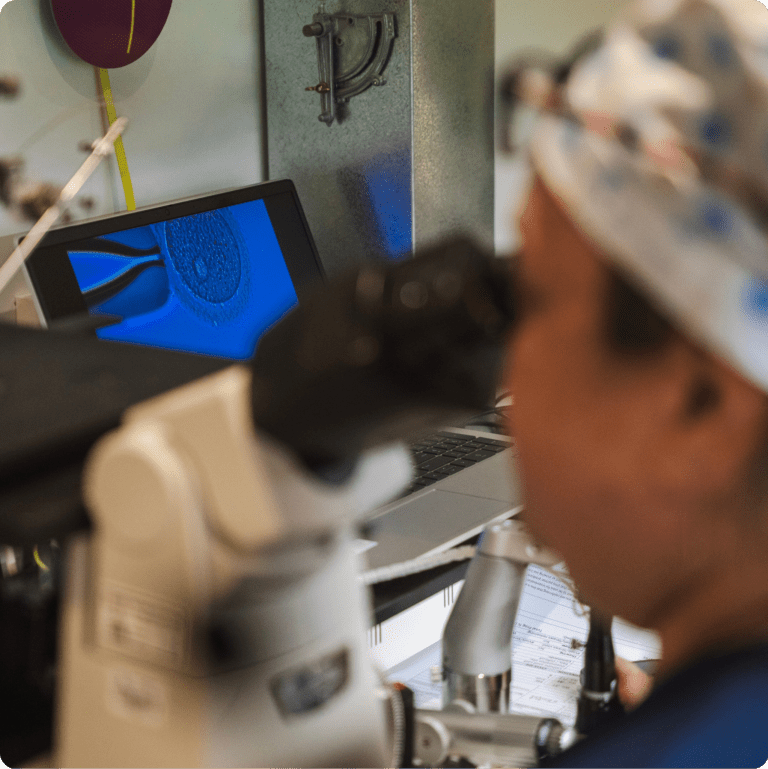
Australia’s first intraovarian PRP procedure was performed here
In 2017 Demeter Fertility became the first clinic in Australia to perform intraovarian PRP. That was not a single experimental case. It was the start of a program that has since treated hundreds of women from across Australia and internationally, and each cohort has informed how the protocol is delivered today.
That accumulated experience is the practical difference between a clinic that offers ovarian PRP therapy and a clinic that has been doing it for close to a decade. We have also written about how the treatment developed and the pioneering techniques behind it. Our team has data on how patients with different diagnoses respond, which informs who is offered treatment, how many cycles are recommended and how the procedure is timed against IVF.
To our knowledge the Demeter Fertility program remains the only dedicated program of its kind. It combines the procedure with tailored fertility care, cycle monitoring and ongoing patient support rather than treating PRP as a standalone service.
The program is delivered by Dr Knight. After your initial assessment you are matched with the specialist best suited to your diagnosis, and you can meet the full team on our practitioners page.
How does PRP for Ovarian Rejuvenation work?
1. Assessment and suitability
You meet with a Demeter fertility specialist for a full assessment. This covers your AMH, antral follicle count, FSH, treatment history and any previous IVF cycles. Not every patient who enquires is suitable, and we will tell you if we do not think you are a good candidate.
2. Blood collection and PRP preparation
A sample of your blood is taken on the day of the procedure. It is processed in our laboratory to separate and concentrate the platelet rich plasma. Nothing is added from an external source.
3. Ultrasound guided ovarian injection
The concentrated platelet rich plasma is injected into both ovaries under ultrasound guidance, using an approach similar to an IVF egg collection. It is performed as a day procedure and you go home the same day.
4. Monitoring and review
Your fertility markers are rechecked over the following weeks and months. Your specialist reviews whether there has been any measurable change and advises on next steps, which may include a further PRP treatment or moving into an IVF cycle.
5. Integration with your IVF plan
For most patients the point of ovarian PRP therapy is to improve the conditions for an IVF cycle. Your specialist will advise on timing, protocol and whether a technique such as DuoStim double stimulation would suit your response.

Helping women produce new eggs
The traditional view, supported by decades of research, is that women are born with all the eggs they will ever have. Egg count decreases with age leading to a decline in fertility until women are no longer able to conceive.
But medical research advances. The research into ovarian rejuvenation contends the traditional view. It suggests that, when done correctly, the right number of times followed by as many cycles as possible – ovarian rejuvenation therapy may be able to ‘restart’ the ovaries.
To put it another way, women’s bodies may be able to produce new eggs, giving them a second chance at having a baby of their own.
Does Ovarian Rejuvenation work?
A 2024 systematic review published in the Journal of Ovarian Research examined 38 studies covering 2,256 women aged 18 to 55 with diminished ovarian reserve, premature ovarian failure or premature ovarian insufficiency. It concluded that PRP treatment resulted in a statistically significant improvement in the main fertility parameters of diminished ovarian reserve women.
That is a meaningful finding, and it should be read carefully. Improvement in fertility parameters such as AMH and antral follicle count is not the same as a guaranteed live birth, and the studies in the review vary in size and design. This remains an emerging field.
Australian fertility clinics operate under the Reproductive Technology Accreditation Committee code of practice administered by the Fertility Society of Australia and New Zealand, and every treatment cycle we perform is reported to the national registry. What we can tell you is that Demeter has been performing this procedure since 2017, that we monitor outcomes, and that we will give you an honest view of your individual prospects at your assessment rather than a general statistic.
Who is a candidate for ovarian rejuvenation for low ovarian reserve?
You may be considered for treatment if you:
- Have low or borderline AMH levels
- Have been diagnosed with diminished ovarian reserve
- Have been diagnosed with premature ovarian insufficiency or premature ovarian failure
- Are over 38 and experiencing age related fertility decline
- Have had a poor response to previous IVF stimulation cycles
- Have experienced recurrent implantation failure
- Are looking for an alternative before moving to donor eggs
- Have been told by another clinic that your only remaining option is egg donation
Suitability is confirmed only after a comprehensive assessment. Age, AMH, antral follicle count and previous IVF response all feed into that decision.
What is included in our ovarian rejuvenation program in Sydney
A comprehensive fertility assessment is carried to determine whether you are suitable for:
- A personalised treatment plan including ovarian PRP injections
- Laboratory preparation of your platelet rich plasma on site
- Cycle monitoring and repeat testing of your fertility markers
- Integration with your IVF plan, including advanced protocols where appropriate
- Access to our Over 40s Fertility Program where relevant
- Naturopathy and acupuncture support through our in house practitioners
- Ongoing contact with the same clinical team throughout



What does the program cost?
Cost depends on how many treatments your plan involves and whether PRP is being combined with IVF, so we quote individually rather than publishing a single figure that would not apply to most patients.
Contact our team for a personalised quote and information about payment options. We will also be clear at your assessment about what we expect the treatment to achieve for you before you commit to it.
Find out whether ovarian rejuvenation is right for you
If you have been told your ovarian reserve is too low, or that donor eggs are your only remaining option, it is worth getting a second opinion from the clinic that introduced this treatment to Australia. You will be matched with a specialist from our team based on your history and your needs. Your assessment will give you a clear answer about whether the treatment is likely to help in your circumstances.
Demeter Fertility patients access the program through our Hurstville and Liverpool suites:
We also treat interstate and international patients, with initial consultations available by telehealth so that travel is only required for the procedure itself.
FAQs About Ovarian Rejuvenation in Sydney
What is ovarian rejuvenation?
Ovarian rejuvenation is a procedure in which platelet rich plasma, prepared from your own blood, is injected into your ovaries under ultrasound guidance. The aim is to deliver concentrated growth factors into the ovarian tissue to support follicle development and improve fertility markers such as AMH and antral follicle count.
Where can I get ovarian rejuvenation in Sydney?
Demeter Fertility offers this treatment across its Hurstville and Liverpool consulting suites. Dr. Knight performed the first intraovarian PRP procedure in Australia in 2017 and continues to lead the program. Your treating specialist is allocated after your initial assessment.
Is ovarian rejuvenation available in Australia?
Yes. Intraovarian PRP has been performed in Australia since 2017, when the country’s first procedure was carried out at Demeter Fertility. It remains a specialised treatment offered by a small number of clinics.
Who is a good candidate for ovarian PRP therapy?
Women with low AMH, diminished ovarian reserve, premature ovarian insufficiency, a poor response to previous IVF stimulation, or age related fertility decline are the most common candidates. Suitability is confirmed only after a full fertility assessment.
Does ovarian PRP hurt?
The injection is performed laparoscopically under general aneathetic using an approach similar to an IVF egg collection, so you are not awake for it and you go home the same day. Some patients experience mild cramping afterwards. Your specialist will explain the full risk profile before you consent.
How long does it take to see results from ovarian PRP?
Any change in fertility markers is generally assessed over the weeks and months following treatment rather than immediately. Your specialist will schedule repeat testing and review the results with you before recommending a next step.
Can PRP improve AMH levels?
Some studies have reported improvements in AMH and antral follicle count following ovarian PRP, including a 2024 systematic review of 38 studies. Results vary between individuals and cannot be guaranteed, and improvements in markers do not automatically translate into a live birth.
Do I still need IVF after PRP treatment?
For most patients, yes. Ovarian PRP is generally used to improve the conditions for an IVF cycle rather than to replace it. Your specialist will advise on the timing between treatment and stimulation.
Is ovarian rejuvenation covered by Medicare?
The procedure is not covered by a Medicare rebate. Associated IVF treatment may attract rebates. Contact our team for a personalised quote and a breakdown of what is and is not claimable.
How much does ovarian rejuvenation cost?
Cost varies depending on the number of treatments in your plan and whether PRP is combined with IVF. Demeter Fertility provides an individual quote after your assessment, along with information about payment options.